
Physical Rest for Christians: Why It Matters and How to Embrace It
When you think of rest, your mind probably jumps straight to sleep—getting a full night’s rest or taking a mid-day nap. But physical rest for Christians goes beyond simply catching up on sleep. It’s about honoring the body God has given us, allowing it to recover, and trusting that rest is part of His divine design for our well-being.
Many of us have been conditioned to believe that productivity is the ultimate goal—that pushing through exhaustion is a badge of honor. But God calls us to be physically and mentally well so that we can fully step into what He has for us. Without proper rest, we can’t serve, love, or lead effectively.
In this blog, we’ll explore why physical rest is essential for Christians, how it ties into our faith, and practical ways to incorporate it into your life.
What Is Physical Rest?
Physical rest isn’t just about sleeping more—it’s about giving your body the restoration it needs to function at its best. It reduces stress, improves energy levels, and prevents burnout, allowing us to fully embrace the purpose God has set before us.
Here are some key forms of physical rest for Christians that enhance overall well-being:
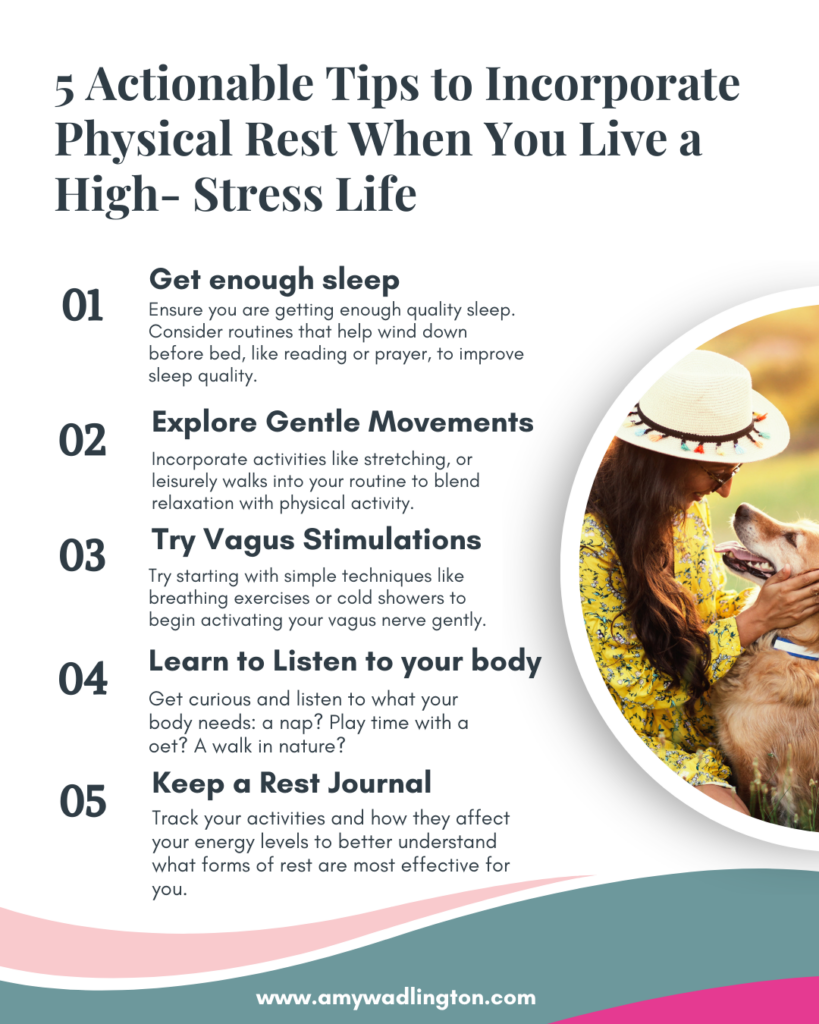
1. Prioritizing Quality Sleep
Sleep is the foundation of physical rest. It’s during deep sleep that God designed our bodies to heal—repairing muscles, growing tissue, and regulating hormones. Yet, in a culture that glorifies busyness, sleep is often the first thing we sacrifice.
Proverbs 3:24 says, “When you lie down, you will not be afraid; when you lie down, your sleep will be sweet.” God intends for us to rest well. Aim for 7–9 hours of quality sleep, and create a nighttime routine that helps you wind down—such as prayer, reading scripture, or deep breathing.
2. Gentle, Restorative Movement
Rest doesn’t always mean doing nothing. God created our bodies to move, but that doesn’t mean we have to push ourselves to exhaustion.
Gentle activities like walking, and stretching can help relieve tension and improve circulation without overexertion. Listening to your body and finding a balance between movement and rest is key to long-term well-being.
1 Corinthians 6:19-20 reminds us, “Do you not know that your bodies are temples of the Holy Spirit?” Taking care of our bodies—including knowing when to rest—is an act of worship.
3. Activating the Vagus Nerve
The vagus nerve plays a key role in relaxation and stress reduction. By stimulating it, we can help our bodies transition out of stress mode and into a state of restoration.
Here are simple ways to do this:
- Deep breathing exercises (like box breathing or diaphragmatic breathing)
- Cold exposure (like splashing cold water on your face or taking a cold shower)
- Humming or singing worship music (this naturally stimulates the vagus nerve and promotes relaxation)
When we actively engage in physical rest, we invite peace into our bodies and create space to hear God more clearly.
4. Listening to Your Body’s Signals
How often do we push through exhaustion, headaches, and tension, believing we’ll “rest later”?
Your body is always communicating with you—and if you don’t slow down and listen, it will eventually force you to rest through burnout, illness, or injury.
Signs your body is crying out for physical rest:
- Persistent fatigue (even after a full night’s sleep)
- Brain fog or difficulty focusing
- Muscle tension and body aches
- Frequent headaches or dizziness
God didn’t design you to run on empty. Pay attention to the signs before your body demands rest.
Why Rest is a Spiritual Discipline
As a Christian life coach for women, I see so many women pushing themselves to exhaustion while trying to fulfill their responsibilities. But rest isn’t selfish—it’s sacred.
Jesus Himself modeled the importance of physical rest. Throughout scripture, we see Him withdrawing from the crowds, taking time to rest, and encouraging His disciples to do the same:
“Then, because so many people were coming and going that they did not even have a chance to eat, he said to them, ‘Come with me by yourselves to a quiet place and get some rest.’” (Mark 6:31)
If Jesus, the Son of God, prioritized rest, shouldn’t we?
Rest isn’t about laziness—it’s about trusting that God is still working when we slow down.
How to Incorporate Physical Rest for Christians into Daily Life
If you’re feeling exhausted, overwhelmed, or disconnected from God’s peace, here are some practical ways to embrace physical rest:
1. Improve Sleep Hygiene
Create a relaxing bedtime routine to improve sleep quality:
- Dim the lights and limit screen time before bed
- Spend time in prayer or journaling to release the day’s worries
- Set a consistent sleep schedule to train your body for rest
2. Move with Intention
Incorporate gentle movement into your day:
- Take a slow walk outside and enjoy God’s creation
- Stretch in the morning or before bed to relieve stress
- Choose activities that refresh rather than deplete you
3. Practice Deep Breathing
When you feel stressed or anxious, pause and breathe deeply.
- Try box breathing: Inhale for 4 seconds, hold for 4, exhale for 4, hold for 4.
- Pair breathing with prayer, asking God to renew your strength.
4. Keep a Rest Journal
Track how different activities affect your energy levels.
- What drains you?
- What refreshes you?
- What small shifts could you make to prioritize God’s rhythm of rest?
5. Give Yourself Permission to Rest Without Guilt
Rest isn’t a reward for productivity—it’s a requirement for obedience.
We don’t have to earn rest. We rest because God calls us to.
Finding True Rest: A Holistic Approach
Physical rest for Christians isn’t just about avoiding exhaustion—it’s about living fully in alignment with how God created us.
In my podcast, Her Unraveled Life, I explore how Christian women can embrace rest without guilt and incorporate it into their faith journey.
You can listen to the full episode here: [Spotify link embedded]
If you’re feeling drained and ready to break free from exhaustion, I’d love to support you.
- Join my Free Facebook Community → www.amywadlington.com/community
- Book a Free 15-Minute Coffee Chat with Me → Schedule here
- Download My Free Guide: Getting Past Weight Loss Resistance → Get it here
God has so much in store for you—but He wants you to be physically, mentally, and spiritually well so you can fully step into your calling.
Let’s stop wearing exhaustion as a badge of honor and start embracing the rest that God freely gives us.
Are you ready to step into His rhythm of rest? Let’s take the first step together.
Next Steps
Listen to this podcast episode about physical rest today!
Want to dive deeper? Check out the entire Rest Series on my podcast:
🔹 The Importance of Rest
🔹 Physical Rest
🔹 Mental Rest
🔹 Social Rest
🔹 Emotional Rest
🔹 Sensory Rest
🔹 Creative Rest
🔹 Discovering God’s Rest
April 19, 2024
Leave a Reply
This One Thing Is Fueling Your Overthinking (and How to Stop It)
101
Global Ranking
2%
TOP
23
55
24
65
Freedom Through Inner Healing & Deliverance With Guest Jackie Morales
From Self-Doubt to Breakthrough: Kristin’s Story of Clarity and Trusting God
Tired of Being Strong? How to Stand Firm in Spiritual Warfare and Find Rest
Feeling Stuck in Your Healing Journey? Trauma Healing for Christian Women
Impostor Syndrome Blocking Your Clarity? How to Move Forward in God’s Plan
83
The Go-To Podcast with prophetic insight to help women break free from fear, overwhelm, and confusion—so they can step boldly into their God-given calling with peace and clarity.
Most Binge-Worthy Episodes
Hello!
I'm so glad you're here
I'm Amy and I help ambitious women of faith breakthrough, get more energy & clarity, stop cravings, and finally feel good again!
Read more about me
find me on
For tips and updates follow me on Insta @amywadlington