
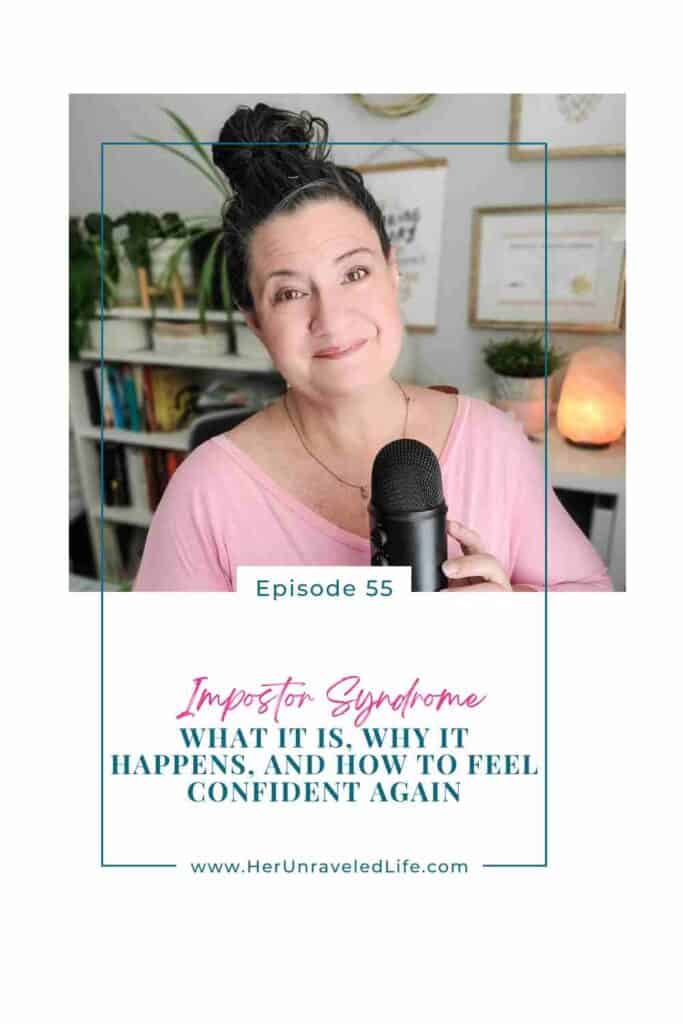
Impostor Syndrome: What It Is, Why It Happens, and How to Feel Confident Again
Impostor syndrome is something far too many Christian women silently battle. It shows up as self-doubt, fear of being exposed as a fraud, and the nagging belief that you’re just not qualified, no matter how prepared or called you are. Whether you’re stepping into a new season of ministry, launching a business, or simply trying to obey God in the day-to-day, impostor syndrome can keep you stuck, second-guessing, and spiraling in insecurity. But here’s the truth: feeling unqualified doesn’t mean you are unqualified. And today, we’re going to explore what impostor syndrome is, why it’s so common among faith-driven women, and how to overcome it with confidence rooted in Christ.
As a Christian Life Coach for women, I’ve noticed that there’s a quiet battle that plays out in the

minds of many Christian women; a deep, internal tension that says, “You’re not enough. You’re not ready. You’re not qualified.”
It doesn’t matter how much you’ve overcome, how much you’ve learned, or how clear the calling on your life is. There’s still this lingering fear that at any moment, someone will figure out you don’t belong. That you’ve somehow fooled everyone into thinking you’re capable, when really, you’re just holding it all together with a shaky smile and sheer willpower.
This experience has a name: impostor syndrome.
In this post, we’re exploring what imposter syndrome actually is, why it’s so common among faith-driven women, and the real, biblical path to confidence that doesn’t require striving, perfection, or more credentials.
The Hidden Cost of Impostor Syndrome
When I became a certified life and health coach, I had already spent over a decade navigating my own health journey. I battled chronic illness and autoimmune symptoms for more than twenty years. I had studied relentlessly, implemented what I learned, and even reversed a condition I was told I’d have for life, all through nutrition, lifestyle, and prayer.
In 2020, I lost my job in marketing and enrolled in one of the top health coaching programs. There, I studied over 100 dietary theories and listened to hours upon hours of training from top experts in the field. I had walked through the fire myself and come out stronger, more equipped, and deeply passionate about helping others heal, too.
I should’ve been confident.
But I wasn’t.
Because underneath all of that preparation was one nagging belief:
“No one will take me seriously as a health coach until I lose weight.”
That single thought, one that had nothing to do with my actual ability to help people, kept me from building my business for nearly four years. I had everything I needed, except the belief that I was enough.
This is the very essence of impostor syndrome.

What Is Imposter Syndrome?
Imposter syndrome is a psychological pattern where a person doubts their accomplishments and has a persistent internalized fear of being exposed as a fraud. It’s not rooted in reality; it’s rooted in insecurity and fear.
Even when you have evidence of your competence, impostor syndrome whispers:
- “You’re not ready.”
- “Someone else could do this better.”
- “You’re not spiritual enough to lead anyone.”
- “What if they find out you don’t have it all together?”
It keeps women who are called by God, fully capable, and completely equipped from moving forward in what God has assigned them to do.
Why Impostor Syndrome is Especially Common Among Christian Women
Christian women often face a unique combination of internal pressure and external expectations. Many of us were raised to be humble, quiet about our strengths, and hesitant to stand out. Combine that with a deep desire to honor God and “get it right,” and the result is often paralysis.
The desire to be obedient gets tangled up with perfectionism. Pride masks itself as humility. And spiritual warfare steps in to confuse and discourage us, right when we’re on the edge of breakthrough.
When the enemy can’t stop your calling, he’ll try to make you doubt your readiness for it.
How to Finally Feel Confident Again
The path out of impostor syndrome isn’t more credentials, more knowledge, more experience, or more effort. It’s a shift in belief… and it begins by renewing your mind with truth.
Here’s a biblical framework to rebuild your confidence from the inside out:
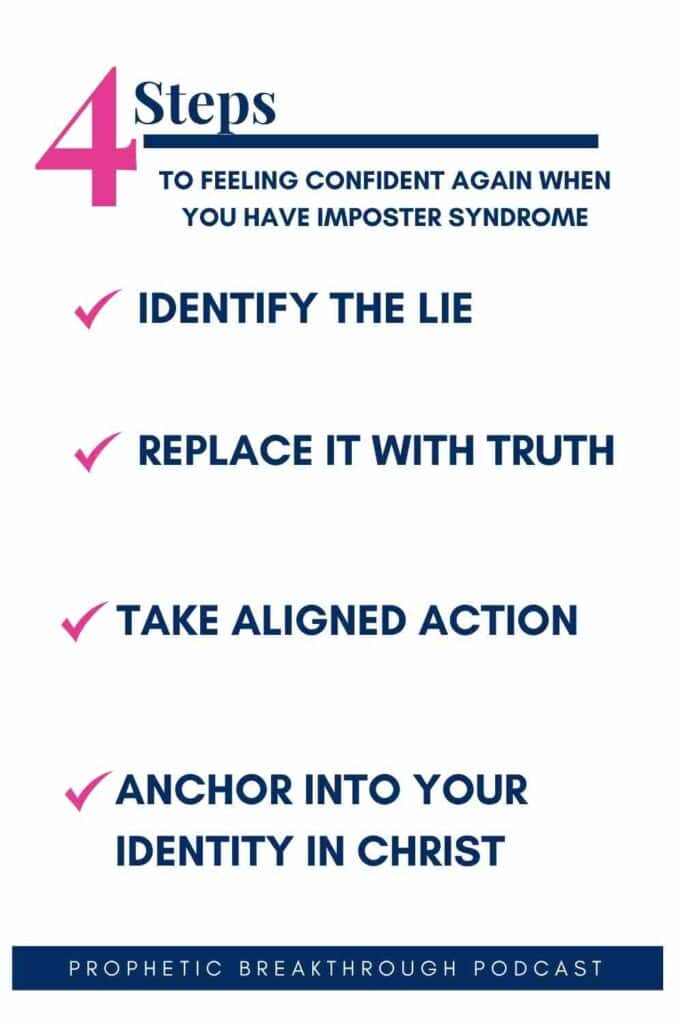
1. Identify the Lie
Every episode of impostor syndrome begins with a lie.
A belief that you’ve agreed with, often without realizing it.
Take time to reflect:
What are you believing that’s holding you back?
Common lies sound like:
- “I need to have it all together before I lead anyone.”
- “I’m not spiritual enough to talk about faith.”
- “I have to look the part before I can serve.”
Bring the thought into the light. Give it a name. You can’t renew what you won’t acknowledge. Your thoughts shape your reality more than you realize. What if, instead of saying ‘I don’t want to be stuck anymore,’ you started saying, ‘’I am moving forward with clarity and confidence’?
Reflection Journaling Prompt:
What lie has been shaping your thoughts about your calling?

2. Replace It With Truth
Once the lie is identified, it has to be replaced. And not with fluffy affirmations—but with unshakable truth.
2 Timothy 1:7 reminds us, “For God gave us a spirit not of fear but of power and love and self-control.”
You were not designed to be driven by fear. You were created to move in power, love, and a sound mind.
Truth always trumps emotion. But you must speak it, meditate on it, and make it louder than the lie.
3. Take Aligned Action Anyway
This is where many women stay stuck: waiting to feel ready before taking the next step.
But confidence isn’t a prerequisite for obedience. It’s the fruit of obedience.
In Scripture, God rarely called someone who felt fully ready. Moses, Esther, Gideon… they all hesitated. But God equipped them as they went.
Faith requires movement.
What small step can you take today that aligns with the woman God is calling you to become?
4. Anchor Into Identity, Not Outcome
If your confidence is based on results—likes, sales, validation—you will always feel uncertain.
But when your identity is anchored in Christ, your confidence becomes unshakable.
Colossians 3:3 says, “Your life is hidden with Christ in God.”
This is your foundation. Not your appearance, not your performance, not your perfection.
Confidence is not about being flawless. It’s about knowing who you belong to.
Final Encouragement
Impostor syndrome isn’t a sign you’re not called.
It’s often a sign that you are.
The enemy doesn’t bother with women who pose no threat to the Kingdom. But you? You’re a threat. You’re a light. You’ve been assigned.
So walk forward… imperfect, obedient; one small step at a time.
Not waiting to feel confident, but allowing confidence to grow as you walk.
The truth is, you’re more ready than you think.
And the world needs what you carry.
FAQ: Impostor Syndrome in Christian Women
What is impostor syndrome?
Impostor syndrome is the belief that you’re not really qualified, capable, or worthy, despite evidence to the contrary. It often leads to self-doubt, overthinking, and fear of being “found out” as a fraud.
Is impostor syndrome a spiritual issue?
It can be. While it often stems from mindset and cultural conditioning, many Christian women experience impostor syndrome when they confuse humility with self-doubt or believe the enemy’s lies about their worth and readiness.
How do I know if I have impostor syndrome?
If you regularly think things like, “Who am I to do this?” or “I’m not ready,” despite being equipped, trained, or called, you may be dealing with impostor syndrome.
How can I overcome impostor syndrome as a Christian woman?
Start by identifying the lie you’re believing. Replace it with Scripture and truth. Take small steps of aligned action anyway. And most importantly, anchor your confidence in your identity in Christ, not in the outcome.
Can I still make an impact if I struggle with impostor syndrome?
Absolutely. Many women make a powerful impact while overcoming self-doubt. You don’t have to be perfectly confident to be effective; you just have to be willing to do what God is asking you to do, even when you don’t feel qualified or ready. A good place to start would be journaling. Here are some Christian journal prompts to help you get started.
Save for Later

June 23, 2025
Leave a Reply
This One Thing Is Fueling Your Overthinking (and How to Stop It)
101
Global Ranking
2%
TOP
23
55
24
65
Freedom Through Inner Healing & Deliverance With Guest Jackie Morales
From Self-Doubt to Breakthrough: Kristin’s Story of Clarity and Trusting God
Tired of Being Strong? How to Stand Firm in Spiritual Warfare and Find Rest
Feeling Stuck in Your Healing Journey? Trauma Healing for Christian Women
Impostor Syndrome Blocking Your Clarity? How to Move Forward in God’s Plan
83
The Go-To Podcast with prophetic insight to help women break free from fear, overwhelm, and confusion—so they can step boldly into their God-given calling with peace and clarity.
Most Binge-Worthy Episodes
Hello!
I'm so glad you're here
I'm Amy and I help ambitious women of faith breakthrough, get more energy & clarity, stop cravings, and finally feel good again!
Read more about me
find me on
For tips and updates follow me on Insta @amywadlington